Shared Publisher
What is the Shared Publisher?
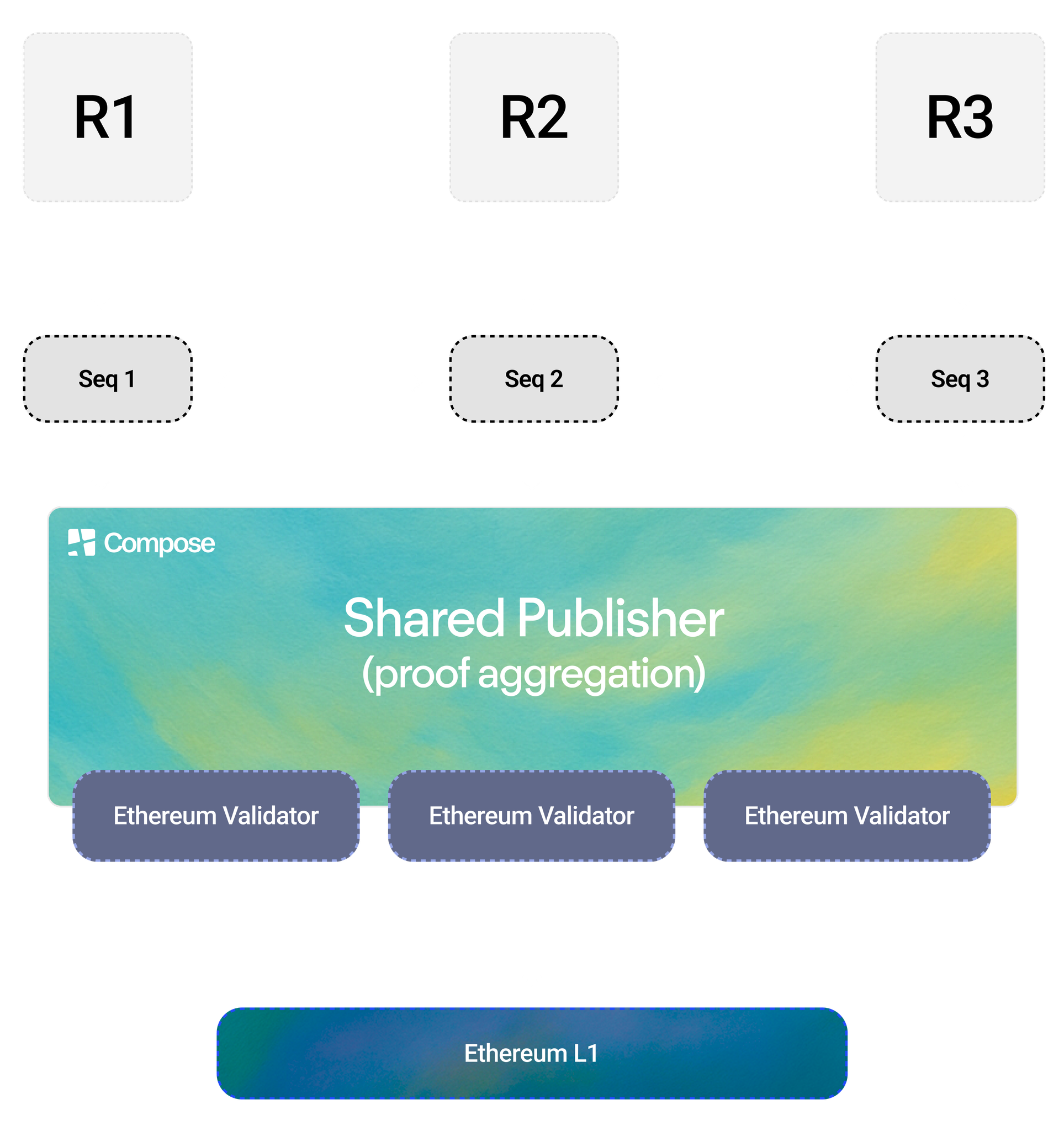
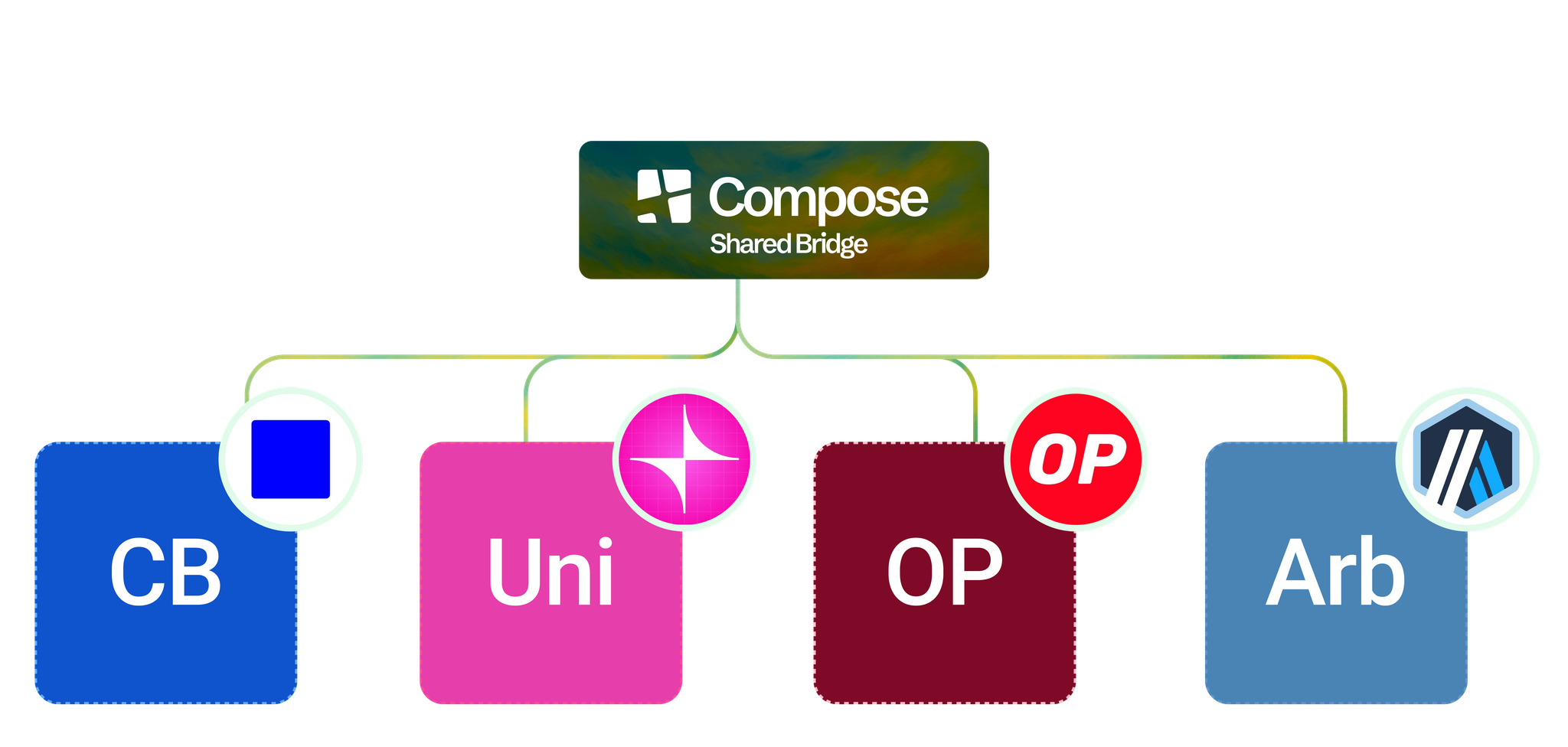
The Shared-Publisher(SP) acts as a coordination layer between multiple rollups, facilitating cross-chain transaction and ZK proof aggregation.
The SP architecture builds on three fundamental principles:
-
Sovereignty Preservation: Each rollup maintains complete control over its sequencing mechanism, fee markets, and execution environment while participating in cross-rollup coordination.
-
Horizontal Scaling: Rather than consolidating and limiting execution to a single coordinator (as in shared sequencing solutions), SP achieves the desired parallel processing across rollups with coordinated publishing.
-
Ethereum Alignment: The publisher election mechanism leverages Ethereum's validator set, following a based approach and inheriting Ethereum's security and decentralization properties.
How it Works (4-Step Process)
- Transaction Initiation: User submits a cross-rollup transaction bundle (e.g., on Rollup A: send ETH to Rollup B; on Rollup B: receive ETH from Rollup A)
- Local Processing & Message Generation: Each rollup's sequencer processes its part independently and generates cross-rollup messages through the Mailbox interface
- Two-Phase Commit Coordination: Shared Publisher coordinates atomic execution using a standard database agreement protocol:
- Phase 1 (Prepare): Publisher asks all rollups, "Can you execute your part?" - rollups vote commit/abort based on local simulation
- Phase 2 (Commit/Abort): If all have voted to commit, the publisher broadcasts "Execute now!" and all rollups execute simultaneously. If any voted abort, all rollups abort.
- Atomic Settlement: All related rollup blocks are proven to Ethereum L1 in a single atomic operation
Next: Two-Phase Commit
The Shared Publisher's coordination mechanism is built on the Two-Phase Commit protocol, which ensures that all rollups reach consensus on whether to execute or abort cross-rollup transactions. This protocol guarantees atomicity across the entire network, preventing partial execution that could lead to inconsistent states.